
Back to case studiesComlurb case study
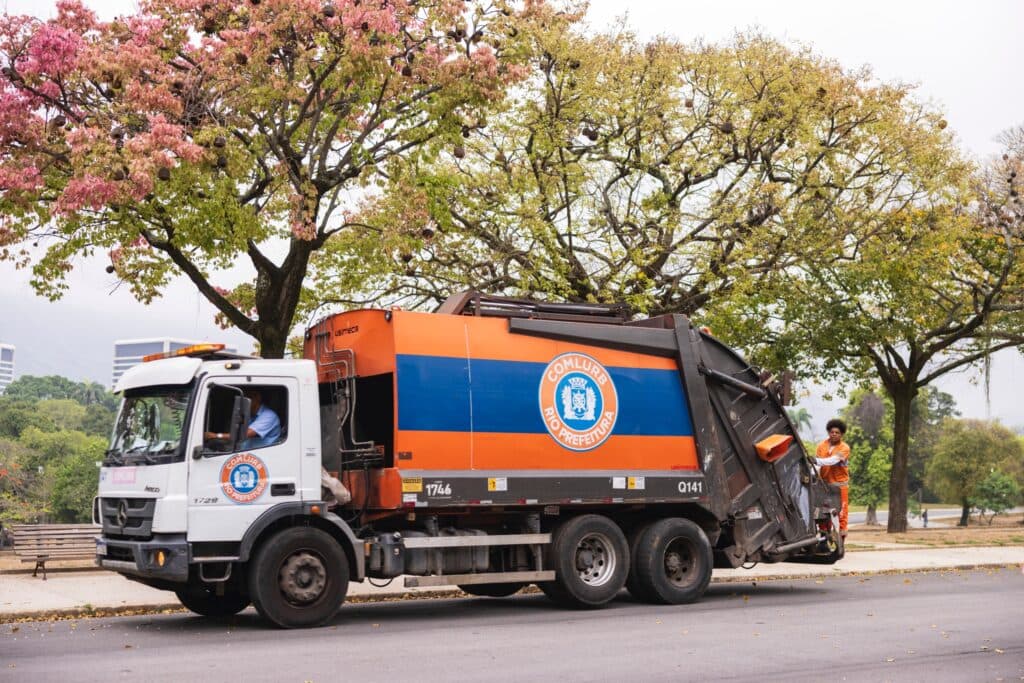
How Comlurb centralized its fleet data in a single system
Rio de Janeiro's urban sanitation company: waste collection, street sweeping, public road maintenance and waste management.
~900
vehicles with consolidated fuel consumption data
1st
Comlurb emissions inventory
1 and 2
emission scopes mapped
Challenge
With a fleet of nearly 900 vehicles, the company struggled to obtain consistent, integrated data on fuel use, GHG emissions and operational performance.
Specifically
- No consolidated metrics for fuel consumption and GHG emissions by vehicle or route;
- Siloed systems: manual spreadsheet data, scattered records and low reliability;
- Difficulty monitoring the environmental impact of operations, responding to new regulatory requirements and reporting to the public;
Our Solution
- Enform carried out Comlurb's first emissions inventory, covering its core activities (urban cleaning, transportation and landfill management), with a focus on mapping Scope 1 and 2 emissions from its operations.
- Environmental key performance indicators (KPIs) were established, such as CO₂ emissions by vehicle type.
- The company's team was trained to use the app, interpret the data and apply it to operational decision-making.
Results
- Support for strategic decision-making: more effective planning for fleet replacement, adoption of lower-emission vehicles, setting sustainability targets and public accountability;
- Greater transparency and reliability: fewer manual entry errors and standardized reports that enable audits and period-over-period comparisons;
- Centralized data: every vehicle in the fleet now reports consolidated fuel consumption data to a single system;
- Insights for reducing CO₂ emissions.
Business impact
- Compliance with legal and regulatory obligations related to the environment and public transparency.
- An improved institutional image with the public and regulators, demonstrating a commitment to sustainability and efficiency.
- Potential for significant operational cost savings, especially on fuel and maintenance.
- A foundation for future progress: preparing the fleet to adopt green technologies (electrification, alternative fuels), with solid data to support investment.
More case studies
Grupo Reicon
2025 emissions fully neutralized.
- GHG emissions inventory
- Carbon neutralization

Instituto Butantan
First GHG inventory, with an auditable report.
- Domestic production
- Vaccines

Transpetro
Shipbuilding carbon footprint mapped across 3 countries.
- Integrated logistics operations
- Maritime and land transportation